Image Nano Banana Pro
Gourmet Voyage: The Fantasy of Nano Cuisine
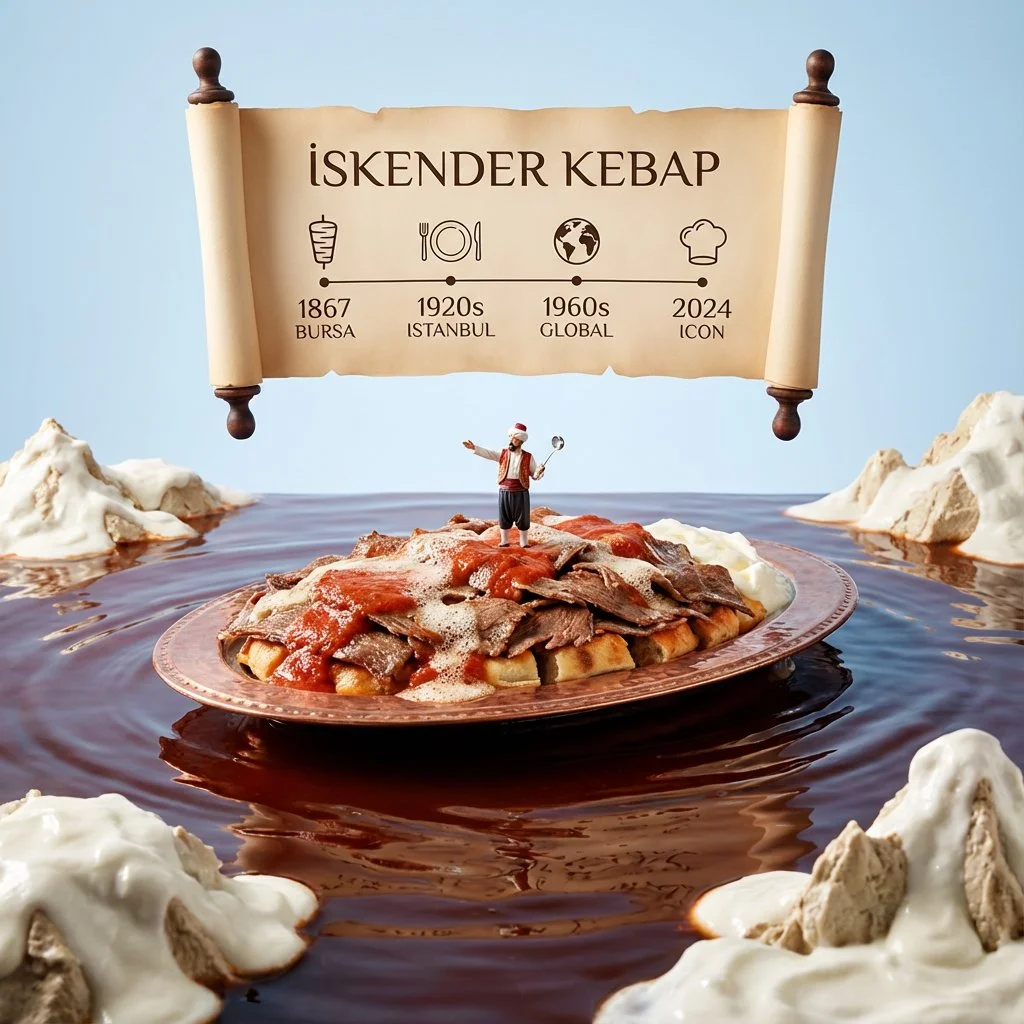
Explore an enchanting world where food meets art! A Turkish meal floats amidst a reflective ocean, with a miniature chef guiding the adventure. Surreal and playful!
Prompt
1. Analyze Input Variable:
Input A is a Specific Dish (e.g., Sushi, Tacos, Burgers, Pancakes).
Deconstruct the dish into three physical states:
     The Vessel:  The primary solid component (e.g., The Nigiri, The Taco Shell, The Bun) which acts as a raft.
     The Ocean:  The primary dipping sauce or liquid environment (e.g., Soy Sauce, Salsa, Maple Syrup).
     The Terrain:  The paste or granular garnish (e.g., Wasabi, Guacamole, Butter chunks) which acts as distant islands or rocks.

  2. Container:
     The Surface:  A vast, liquid horizon. The liquid must be dark, viscous, and highly reflective (Mirror finish).
     The Environment:  No walls or room. A clean, solid   Pastel Sky   background (Light Blue or Soft Cream) that contrasts with the food colors.
     The Islands:  Mounds of "The Terrain" (Wasabi) emerge from the liquid in the foreground and background, framing the scene like jagged rocks.

  3. The Central Composition (The Raft):
     The Ship:  The "Vessel" (Input A) floats centrally in the "Ocean." It must displace the liquid slightly (ripples).
     Reflections:  The food must cast a perfect, sharp reflection into the dark liquid below.
     The Captain:  A 1:87 scale miniature figure (Chef or Historic figure) stands   physically on top   of the food item.
     Action:  The figure is gesturing or pointing towards the horizon/background, leading the way.

  4. The Informational Layer (The Sky Scroll):
     The Object:  A large, horizontal   Parchment Scroll   with dark wooden roller handles floats in the sky behind the food, suspended by invisible wires.
     The Graphics:
          The Header:     Large, elegant Serif typography at the top center of the scroll reads: "[Input A]" (e.g., "SUSHI").
         Timeline:  A horizontal arrow line with 4–5 milestones below the header.
         Icons:  Simple, colorful vector illustrations of the dish's evolution above the dates.
         Text:  Clean, serif dates and tiny captions (e.g., "1824," "2021").

  5. Lighting & Atmosphere:
     Lighting:    Commercial Food Photography.   High-Key. The light source is large and soft, creating glossy white highlights on the "ocean" and the wet textures of the food (e.g., the salmon fat).
     Vibe:  Playful, educational, and surreal.

  Output:   ONE image, 1:1 Aspect Ratio, Macro Photography, High Gloss, "Gulliver's Travels" aesthetic
Published: January 1, 2026 by @Gdgtify