Image ChatGPT Image 2
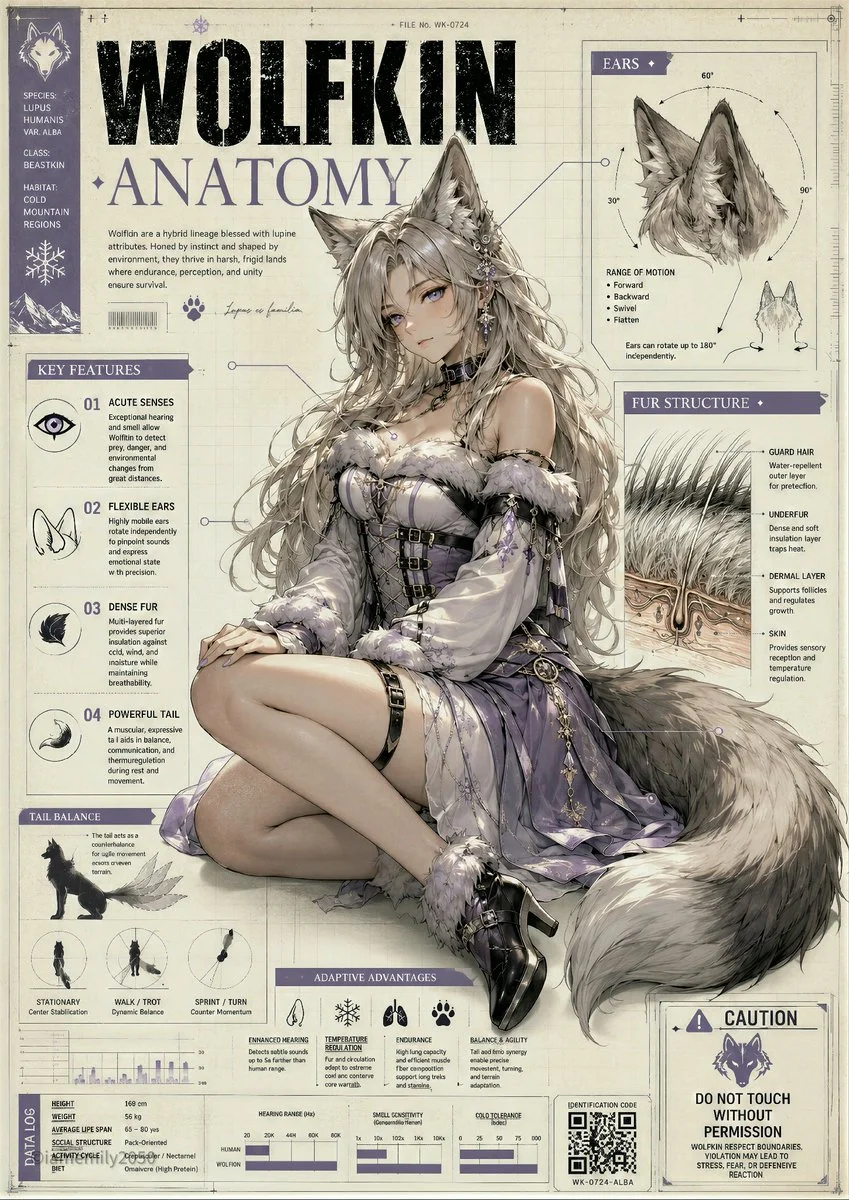
A sphinx woman sits gracefully among anatomical diagrams and notes.
Vertical poster of a feline-human hybrid character seated in three-quarter view, surrounded by scientific annotations and measurement grids.
Prompt
Create a refined vertical anime character design poster presented as a fictional biological anatomy dossier and premium editorial infographic.

The poster is a tall portrait composition with a pale ivory research board background, subtle paper grain, fine grid lines, measurement ticks, registration marks, and precise technical annotations. The visual language should feel like a luxury scientific magazine cover mixed with a fantasy character reference sheet.

At the top, place a large readable two-tier title:
“[SPECIES NAME]”
“ANATOMY”

The first word should be in huge distressed charcoal-black block lettering, spanning most of the page width. “ANATOMY” should sit beneath it in an elegant serif font using a muted accent color suited to the character type. The title must be clear, balanced, and integrated into the poster layout.

The central subject is an adult female fantasy-hybrid character seated in the foreground, occupying the lower two-thirds of the poster. She should be the visual focus, framed by diagrams and annotation panels without having her face, hands, or main silhouette covered.

Her body position should be graceful, compact, and anatomically coherent: seated in a three-quarter view, torso angled slightly toward the viewer, shoulders relaxed, one leg folded forward, the other bent naturally across the body, hands placed believably, and head subtly tilted. Weight distribution must feel grounded. No floating limbs, no broken joints, no duplicated body parts.

The character has the defining anatomical traits of a [HYBRID ARCHETYPE]. These traits must be integrated naturally into the body:
[CHARACTER-SPECIFIC TRAITS]

All non-human features must have believable anatomical origin points. Ears should connect correctly to the head. Horns should emerge from the skull with clear structure. Wings should attach at the upper back and shoulder-blade region. Tails should originate from the base of the spine or behind the pelvis, not float separately. Fur, feathers, wool, horns, claws, or other materials should have clear texture, volume, and direction.

Her expression should match the archetype:
[EXPRESSION AND PERSONALITY]

She wears an elegant fantasy outfit designed around the species identity:
[COSTUME DESCRIPTION]

The outfit must be stylish, tasteful, and non-explicit. It should look intentionally constructed, with logical seams, connected straps, layered panels, attached trims, closures, and believable fabric behavior. Avoid random decoration. Every visible garment element should have a clear design purpose and physical connection.

Arrange printed infographic panels around the character. These are flat editorial graphics on the poster surface, not floating screens. The panels should be organized, clean, and information-rich, with thin lines, icons, labels, silhouette studies, small diagrams, measurement arcs, calibration marks, bar charts, and compact fictional microtext.

Use this general panel system:

Left side:
A “KEY FEATURES” column with four numbered entries:
01 [FEATURE ONE]
02 [FEATURE TWO]
03 [FEATURE THREE]
04 [FEATURE FOUR]

Upper right:
A species-specific anatomical study panel labeled “[PRIMARY FEATURE],” showing a separate diagram of ears, horns, wings, tail, feathers, fur, wool, or other defining structure. Include angle guides, motion arrows, small measurement marks, and technical callouts.

Middle right:
A material or surface-structure panel labeled “[MATERIAL STRUCTURE],” showing a close-up study of fur, feathers, wool fibers, horn texture, skin layer, or other relevant biological surface. Include layered labels and small sectional diagrams.

Lower left:
A balance or movement panel labeled “[MOVEMENT / BALANCE SYSTEM],” showing a simplified silhouette, center-of-mass diagram, circular motion guides, and posture notes.

Bottom area:
An “ADAPTIVE ADVANTAGES” section with three or four icons describing the character’s biological strengths.

Bottom strip:
A “DATA LOG” section with small bar charts, QR-code-like blocks, serial numbers, and technical labels.

Lower right:
A caution label with a species-appropriate warning:
“[CAUTION TEXT]”

Annotation lines should point accurately to the correct body parts. The layout should be dense but controlled, with clear hierarchy: title first, character second, diagrams third. Leave enough negative space so the image feels designed rather than cluttered.

Rendering style: high-end anime illustration, crisp linework, refined anatomy, polished digital painting, soft skin shading, luminous hair, detailed material texture, tactile fur or feather detail where appropriate, subtle glossy highlights, delicate facial features, elegant costume construction, cinematic but gentle lighting, and subtle printed-poster texture.

Color palette:
[COLOR PALETTE]

The final image should feel like a premium fantasy biology reference poster: elegant, precise, readable, and visually coherent.

Negative guidance:
No nudity, no explicit pose, no childlike proportions, no distorted hands, no extra limbs, no floating tails, no misplaced ears, no impossible wing attachment, no random disconnected straps, no unreadable main title, no chaotic typography, no broken perspective, no cluttered panels covering the face, no muddy lighting, no oversaturated colors, no malformed anatomy, no duplicated body parts.
Published: May 27, 2026 by Emily