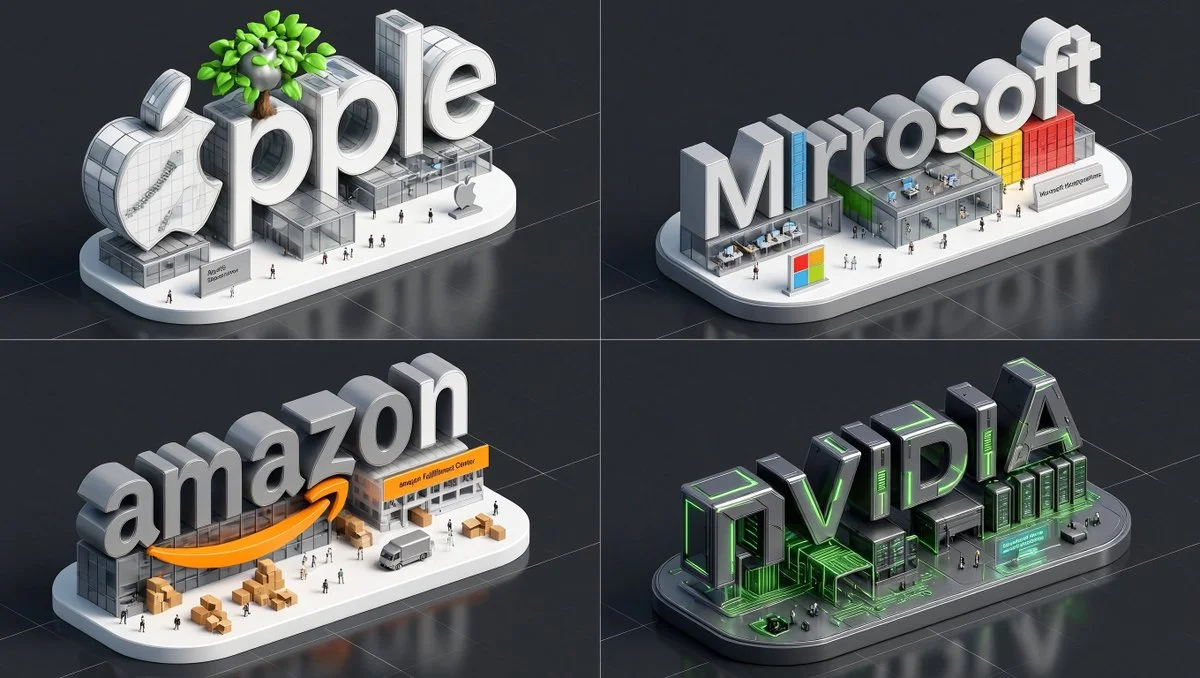
Image MiniMax H3
A Tiny Corporate World Where Every Letter Becomes a Building
Miniature people, planters, and walkways give scale to a polished architectural model that feels like a collectible brand museum, calm and precisely organized for close inspection.
Prompt
Copied. Make it your own here.
Prompt prefilled · Suggested: Nano Banana 2 Lite · 2 credits/image
LIGHTING: Soft studio product lighting, gentle shadows, clean reflections, macro depth, polished commercial clarity.
  COMPOSITION: Centered hero diorama on a floating base or tabletop plinth, viewed from elevated three-quarter isometric perspective.
  MOOD: Sleek, innovative, premium, organized, futuristic, brandable, collectible, and highly inspectable.
  </isometric_tech_campus_wordmark_diorama>

  <transformation>
  - Convert the subject into a miniature isometric campus, showroom, museum, headquarters, city block, or product-experience environment.
  - Preserve the subject’s core identity, name, function, or cultural meaning, but reinterpret it as a clean architectural diorama.
  - Integrate the subject’s name, title, acronym, symbol, or key phrase as massive 3D letters physically forming buildings, walkways, walls, plazas, or display structures.
  - Convert major concepts, features, products, characters, eras, tools, powers, or components into small buildings, rooms, exhibits, kiosks, devices, sculptures, and interactive stations.
  - Replace ordinary scenery with a polished architectural model on a clean base, using tiny people and props to imply scale and activity.
  - Reinterpret information, hierarchy, and relationships as separated zones, pavilions, terraces, courtyards, paths, bridges, and labeled modules.
  - Convert surface detail into clean panels, windows, stairs, railings, signage, screens, rooftop gardens, display cases, and small subject-relevant icons.
  - Use a restrained premium palette with mostly white and neutral materials, allowing small accent colors only for important focal details.
  - Make the final image feel like a luxury product launch, tech campus reveal, brand museum, or miniature experience center built around the subject.
  </transformation>

  <wordmark_rules>
  - Use large dimensional lettering as architecture, not flat text pasted on top.
  - Let the letters create rooms, roofs, bridges, walls, plazas, or display platforms.
  - Keep the wordmark bold, readable, and central from the isometric camera angle.
  - Use bevels, shadows, glass openings, doorways, stairs, and interior cutaways to make the typography feel physically inhabitable.
  - If no exact title is supplied, infer a short subject-relevant word, acronym, or emblematic phrase.
  </wordmark_rules>

  <diorama_rules>
  - Build the scene on a rounded rectangular base or clean presentation plinth.
  - Add miniature people, pathways, planters, benches, signs, vehicles, tools, devices, or display props to create scale.
  - Use rooftop gardens, courtyards, terraces, and small open interiors to make the miniature world feel functional.
  - Organize the scene like an exhibit where every zone explains part of the subject.
  - Keep the layout dense enough to reward close inspection but clean enough to read instantly.
  </diorama_rules>

  <shape_language>
  - Favor clean cubes, rounded rectangles, glass boxes, stepped platforms, modular pavilions, large block letters, thin railings, and precise architectural edges.
  - Use tiny circular trees, simplified people, small devices, and minimal props for scale contrast.
  - Keep all forms crisp, modern, and product-designed.
  - Avoid messy organic sprawl; everything should feel intentionally planned and spatially organized.
  </shape_language>

  <rendering_rules>
  - Render as a high-quality 3D isometric product render or macro photograph of a physical architectural model.
  - Use soft shadows, subtle bevel highlights, clean ambient occlusion, and sharp readable details.
  - Keep the background neutral, dark gray, light gray, or studio-white so the diorama stands out.
  - Use shallow depth of field lightly, but keep the wordmark and main structures crisp.
  - Make surfaces feel premium, matte, clean, and manufactured.
  - Preserve a polished keynote-presentation quality.
  </rendering_rules>

  <finish>
  - Isometric premium brand-campus diorama aesthetic.
  - Large architectural wordmark, miniature people, clean white buildings, showroom interiors, landscaping, platforms, and product-exhibit details.
  - Sleek tech-launch energy with collectible architectural-model precision.
  - Smart, polished, futuristic, and highly shareable.
  - Looks like the subject became a miniature headquarters, museum, or product ecosystem.
  </finish>

  <avoid>
  - Avoid photoreal full-size city scenes.
  - Avoid gritty realism, dirt, decay, or chaotic clutter.
  - Avoid clay, plush, paper-cut, anime, comic, or low-poly material logic.
  - Avoid flat poster design; keep it dimensional and architectural.
  - Avoid unreadable typography.
  - Avoid placing text as a flat overlay; the wordmark must be integrated into the physical model.
  - Avoid overusing brand logos unless explicitly supplied; use subject-relevant symbols instead.
  - Avoid dark cinematic drama; preserve clean premium product-display clarity.
  </avoid>
}
Published: November 13, 2026 by Gadgetify