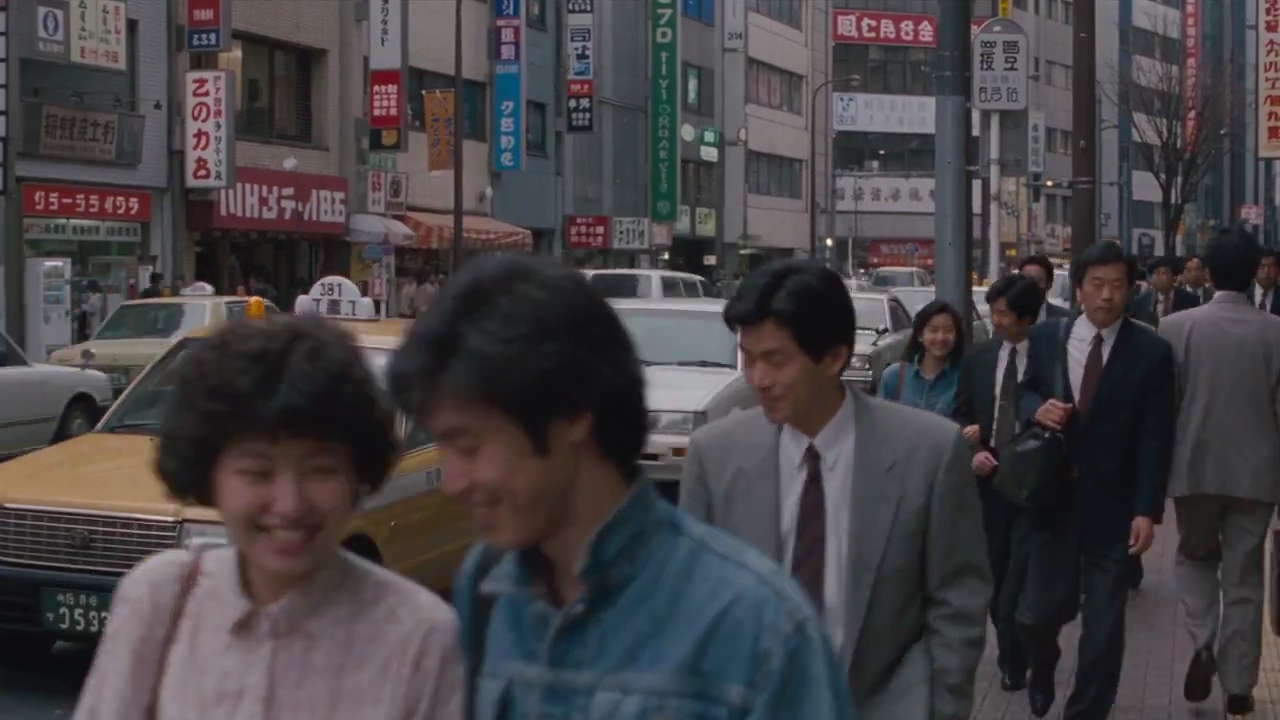
AI Recreates 1989 Tokyo with Uncanny Vintage Video Realism
This AI-generated clip mimics professional 1989 footage, capturing everyday moments from Shinjuku to Ginza with period accuracy.
Prompt
Create a 30-second, 16:9, 1080p ultra-photorealistic archival video of everyday Tokyo street life in 1989.

The entire video must look like genuine footage recorded in Tokyo in 1989 with an unusually good professional video camera. It should feel like a real archival recording that has been digitized in HD, not a modern recreation, not a movie, and not an AI-generated vintage filter.

MAIN FOCUS:
The video is primarily about ordinary daily life on the streets of Tokyo in 1989. Crowded sidewalks, people walking in different directions, period-correct Japanese taxis, Toyota sedans, Nissan cars, buses, bicycles, storefronts, convenience stores, vending machines, newspaper kiosks, small restaurants, and the constant movement of the city. The camera should feel like someone documenting everyday Tokyo, not showcasing its architecture or creating a cinematic scene.

SCENE SEQUENCE:

* 0–5s: Street-level view from a busy Tokyo sidewalk, such as Shinjuku, Shibuya, Ginza, or Ikebukuro. A crowd of pedestrians walks past the camera in both directions. Period-correct Japanese taxis and cars move through the street. People wear authentic late-1980s Japanese clothing. Natural handheld camera movement.
* 5–10s: A crowded avenue intersection. Pedestrians wait at a crosswalk, then begin crossing together. Buses, taxis, compact Japanese cars, and bicycles move through the frame. The camera slowly pans with the street activity.
* 10–15s: A closer street-level view of everyday pedestrians, Japanese storefronts, newspaper kiosks, vending machines, convenience stores, small restaurants, and passing cars. People carry shopping bags, talk to each other, smoke cigarettes, and go about their normal routines. Natural, unscripted-looking movement.
* 15–20s: A slightly wider street view showing a busy Tokyo avenue filled with pedestrians and traffic. Dense buildings, Japanese signs, overhead utility cables, streetlights, and shopfronts appear only as background elements. A train line or elevated railway may naturally appear in the distance, but street activity remains the focus.
* 20–25s: Another crowded sidewalk and intersection. Japanese taxis, buses, compact cars, bicycles, pedestrians, storefronts, and vending machines create a constantly moving urban scene. The camera gently follows the flow of people.
* 25–30s: Final street-level view of a busy Tokyo avenue, with pedestrians crossing, cars passing, buses stopping, and traffic continuing naturally. End like a real archival recording, without a dramatic cinematic conclusion.

CAMERA & CINEMATOGRAPHY:
Real 1989 professional Japanese video-camera footage. Mostly street-level, eye-level, and slightly elevated sidewalk viewpoints. Natural handheld and vehicle-mounted camera movement, slow pans, gentle zooms, slight camera vibration, occasional imperfect framing, and realistic motion blur. The camera should feel operated by a real person filming the city, with small imperfections and natural timing. No modern drone footage, no gimbal-smooth movement, no impossible camera angles, and no dramatic cinematic camera moves.

IMAGE QUALITY:
Surprisingly sharp and detailed for 1989, with clear pedestrians, cars, storefronts, and street details. Slightly soft image edges, natural lens rendering, mild analog video noise, subtle highlight bloom, gentle chromatic aberration, and a very subtle late-1980s Japanese professional-video texture. The footage should look like an unusually good archival camera recording, not degraded VHS.

COLOR & LIGHTING:
Overcast or soft natural daylight typical of Tokyo, realistic diffuse sunlight, slightly muted highlights, natural shadows, and authentic late-1980s Japanese color reproduction. Colors should be realistic and slightly desaturated compared with modern digital footage, but still natural. No modern cinematic teal-and-orange grading, no excessive contrast, no fake film look, and no heavy retro effects.

HISTORICAL AUTHENTICITY:
Everything must look correct for Tokyo in 1989: period-correct Japanese taxis and automobiles, Japanese buses, bicycles, storefronts, vending machines, Japanese-language advertisements and signage, period clothing, hairstyles, street furniture, utility infrastructure, and architecture of the era. Use authentic late-1980s Japanese commercial signage and typography. No modern vehicles, smartphones, LED billboards, contemporary advertisements, modern clothing, or post-1989 redevelopment.

REALISM:
Natural traffic movement, believable pedestrians, realistic reflections, accurate building geometry, and physically correct lighting. People should move naturally and independently, with varied walking speeds, gestures, and directions. Cars must have realistic proportions, wheels, reflections, and motion. Japanese vehicles should have authentic 1980s proportions, license plates, body designs, and road behavior. Buildings, signs, utility poles, and railway infrastructure must remain stable and geometrically accurate.

EDITING:
Use several connected street-level shots with natural archival-video pacing. Most shots should be crowded sidewalks, intersections, shopping streets, and busy avenues. Keep skyline and architectural shots to a minimum. Buildings should mainly appear as background elements behind people and traffic. Use simple cuts between shots, like genuine archival footage from one recording session. No flashy editing, no music-video style, no artificial cinematic transitions, and no text or subtitles.

FINAL RESULT:
The viewer should genuinely feel that they are watching real Tokyo footage filmed in 1989 with an unusually good professional video camera. It should feel like an ordinary day in the city, full of people, cars, buses, bicycles, storefronts, Japanese signs, and natural street activity. The realism of the pedestrians, vehicles, lighting, signage, and camera behavior is more important than cinematic beauty.
Published: September 9, 2026 by K