Image ChatGPT Image 2.5
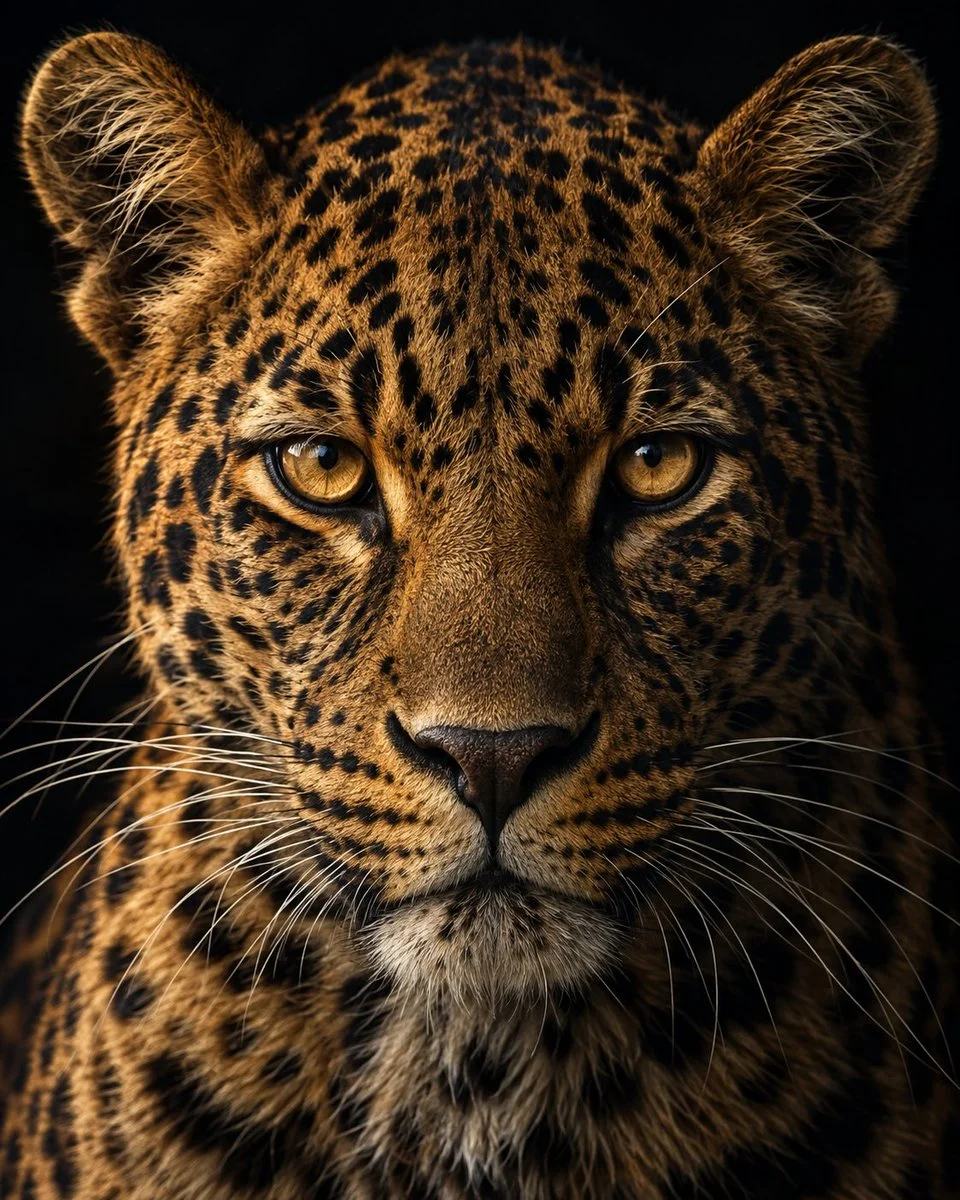
Black rosette leopard stares calmly into camera with amber eyes
Ultra-realistic fine-art portrait of a black-and-golden rosette leopard. Amber eyes lock onto the lens with silent, haunting intensity.
Prompt
[Create an ultra-photorealistic, cinematic close-up portrait of a magnificent black-and-golden rosette leopard, captured in an intimate, powerful fine-art wildlife photograph. The animal’s face fills almost the entire frame, creating an intense and captivating connection through its calm, focused eyes. The image should look like a real professional wildlife photograph taken with a high-end camera, featuring extraordinary fur detail, natural anatomy, realistic lighting, and a dark, luxurious atmosphere.

Subject & Composition

A single adult leopard faces directly toward the camera in a perfectly centered, symmetrical close-up portrait. The head and upper neck dominate the frame, with both ears fully visible near the top corners and the lower chest fading toward the bottom edge.

The leopard’s face should be the unmistakable focal point. Its head is large in the frame, with a broad forehead, strong cheek structure, rounded ears, prominent muzzle, and a powerful yet elegant appearance.

Maintain a natural, realistic feline head shape and proportions. The leopard is looking directly into the lens with a quiet, alert, slightly mysterious expression.

Use a tight vertical composition, approximately 4:5 aspect ratio, with the face positioned centrally and very little empty space around the head.

Fur & Rosette Pattern

Render exceptionally detailed, realistic leopard fur across the entire head and neck.

The coat features a rich warm golden-brown base with deep black rosette markings and irregular dark spots. The markings should be naturally varied, following the actual contours of the animal’s forehead, cheeks, temples, and neck.

Include:

Fine individual fur strands across the forehead and cheeks.
Short, dense fur around the nose and muzzle.
Longer, softer fur along the lower jaw and neck.
Natural black rosettes with warm brown interiors.
Subtle golden highlights on raised fur.
Fine whisker follicles and delicate facial hairs.
Realistic variations in fur direction and density.
Soft, slightly fluffy fur around the ears and cheeks.
Natural color transitions between golden, brown, black, and muted cream tones.

The leopard must look like a real wild animal, not a cartoon, digital painting, or artificially patterned creature. Preserve the irregularity and complexity of natural fur.

Eyes

The eyes are the emotional centerpiece of the image.

The leopard has two realistic amber-golden eyes with warm honey and brown tones, dark pupils, and subtle natural reflections. The gaze is direct, calm, intense, and slightly mysterious.

Make the eyes highly detailed and lifelike, including:

Realistic glossy corneal reflections.
Natural dark pupils.
Detailed golden-brown irises.
Fine texture around the eyelids.
Subtle shadows beneath the brow.
Slightly narrowed, focused expression.
Natural asymmetry between the two eyes.

The eyes should not glow unnaturally. Avoid exaggerated fantasy eyes, neon colors, or artificial highlights.

Face & Anatomy

Preserve accurate leopard anatomy and realistic facial proportions.

The forehead is broad and heavily patterned, leading down toward a strong central muzzle. The nose is large, dark brown to black, with a realistic textured surface and subtle moisture.

The muzzle should feature:

A broad, naturally shaped nose.
Fine short fur around the nostrils.
Soft cream and golden fur around the mouth.
Long white whiskers extending naturally from both sides.
Realistic dark lips and mouth contours.
A slightly lighter chin and lower muzzle.
Natural folds and shadows around the cheeks.

The face should feel powerful, calm, and majestic without an aggressive snarl. The mouth remains closed and relaxed.

Ears

Both ears are visible and naturally positioned near the upper left and upper right edges of the frame.

The ears should feature realistic leopard anatomy, with rounded outer edges, dark outer fur, and warm golden-brown inner fur.

Include fine, delicate hairs along the ear edges and subtle soft fur inside the ear cavities. The ears should look naturally fluffy, slightly uneven, and physically believable.

Whiskers & Fine Details

Add long, delicate white whiskers extending outward from both sides of the muzzle. Each whisker should have a natural curve, realistic thickness, and subtle variation in length.

Include tiny individual hairs around the nose, cheeks, chin, and jawline. The fur should be extremely detailed without appearing artificially sharpened.

Capture realistic natural imperfections such as subtle uneven fur patterns, tiny tonal variations, and authentic animal texture.

Lighting & Atmosphere

Use dramatic cinematic low-key lighting against a nearly black background.

The primary light is soft, warm, directional light from the upper-left/front, gently illuminating the leopard’s forehead, eyes, nose, and cheekbones.

The left side of the face is slightly brighter, revealing the rich golden-brown fur and black rosette pattern. The right side falls into deeper shadow, creating a dramatic sense of depth while retaining visible fur detail.

Use subtle warm highlights along the forehead, ears, and muzzle. Keep the background dark, uncluttered, and free from distractions.

The overall lighting should feel like a premium wildlife editorial portrait — intimate, moody, luxurious, and powerful.

Background

A completely dark, soft black background with no visible landscape, trees, cage, or environmental distractions.

The background should be smooth and understated, allowing the leopard’s golden fur and eyes to stand out dramatically.

Use a subtle natural falloff around the head and shoulders. No artificial halo, glowing outline, or fantasy atmosphere.

Photography & Camera

Ultra-photorealistic wildlife photography, premium cinematic fine-art portrait, shot with a professional full-frame camera.

Simulate:

85mm or 105mm wildlife portrait lens.
Extremely sharp focus on the eyes and central facial features.
Shallow depth of field.
Natural low-key studio-style wildlife lighting.
High dynamic range.
Realistic exposure and contrast.
Fine cinematic film grain.
Detailed fur texture.
Authentic color grading.
Natural optical depth and subtle background falloff.

The image should feel like a real, high-end wildlife photograph captured at close range, not a CGI render or AI-generated illustration.

Color Palette

Deep black background.
Rich golden-brown fur.
Warm amber eyes.
Dark black rosette markings.
Subtle caramel highlights.
Soft cream muzzle and chin.
Deep brown shadows.
Natural muted warm tones.

Keep the colors elegant, realistic, and slightly cinematic. Avoid oversaturation.

Final Mood

The final image should communicate:

Power • Mystery • Wild Beauty • Quiet Confidence • Intensity • Elegance

The leopard’s calm, direct gaze and highly detailed face should create a strong emotional impact. The portrait must feel majestic, natural, and unforgettable.

Negative Prompt

No text, no logos, no watermark, no extra animals, no multiple heads, no cartoon, no anime, no illustration, no painting, no CGI, no plastic fur, no artificial patterns, no unrealistic rosettes, no distorted anatomy, no deformed face, no extra eyes, no extra ears, no duplicated whiskers, no glowing eyes, no fantasy creature, no exaggerated mouth, no aggressive snarl, no blurry face, no low-resolution details, no oversharpening, no oversaturated colors, no artificial background, no visible cage, no collar, no accessories.

Aspect ratio: 4:5 — vertical close-up wildlife portrait.]
Published: September 15, 2026 by Tanvir 🫎