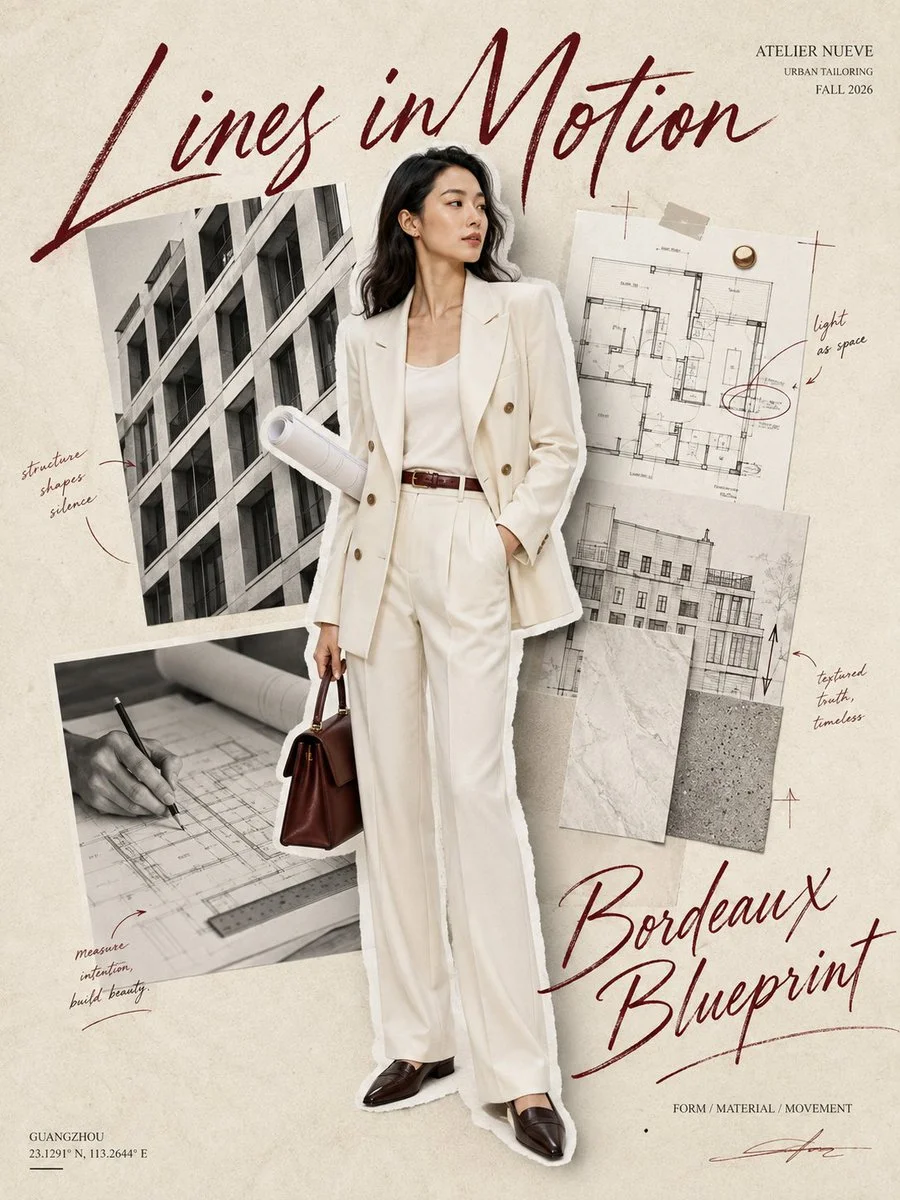
Image ChatGPT Image 2
Crafting a Personal Portrait Poster with Vintage Appeal
Design a scrapbook-style editorial portrait highlighting the subject’s profession or hobby, using a warm ivory background and engaging collage elements.
Prompt
Profession or hobby: [ ]
Subject: [adult man/woman, appearance and personality]
Outfit: [ ]
Natural action or pose: [ ]
Related tools, products, or objects: [ ]
Supporting collage images: [3 related scenes or details]
Main headline: [ ]
Secondary title: [ ]
Brand / editorial information: [ ]
Accent color: [ ]
Aspect ratio: [3:4]

Create a vertical scrapbook-style editorial portrait poster based on the subject’s profession or hobby.

Use a warm ivory textured-paper background with subtle fibers, print grain, and a lightly aged fashion-magazine feel. Place one realistic full-body subject as the dominant cutout, occupying around 60–68% of the composition. Keep the entire body and shoes visible. Add slightly irregular white paper edges and a soft natural paper shadow.

The subject should be performing a small, natural action connected to their profession or hobby rather than standing in a stiff model pose. Use realistic skin texture, natural facial features, expressive eyes, authentic hair, and clearly rendered clothing materials.

Build three supporting collage modules around the subject:

1. One larger environmental or contextual photograph
2. One black-and-white action or detail photograph
3. One smaller collage featuring relevant tools, products, materials, or personal objects

Every supporting image must relate directly to the subject’s identity. Use torn-paper edges, slight rotation, controlled overlap, and subtle shadows. Keep the main subject in natural color while most supporting photographs remain monochrome or softly desaturated.

Add the large handwritten headline “[Main headline]” across the upper section in [accent color]. Add “[Secondary title]” in a smaller handwritten style near the lower area. Include a few clean serif or sans-serif editorial labels using the supplied brand, profession, location, date, product, or material information.

Add restrained hand-drawn arrows, circles, underlines, short notes, measurements, or numbers that help explain the subject’s story. Keep all annotations meaningful and visually controlled.

Maintain 25–30% negative space, one clear visual focus, and a balanced reading path from the headline to the face, outfit, supporting images, and secondary title. The final result should feel like a distinctive personal portrait, fashion editorial, and visual identity profile combined into one poster.
Published: August 6, 2026 by Larus Canus