Image ChatGPT Image 2
Forensic Teardown: The Art of Disassembly
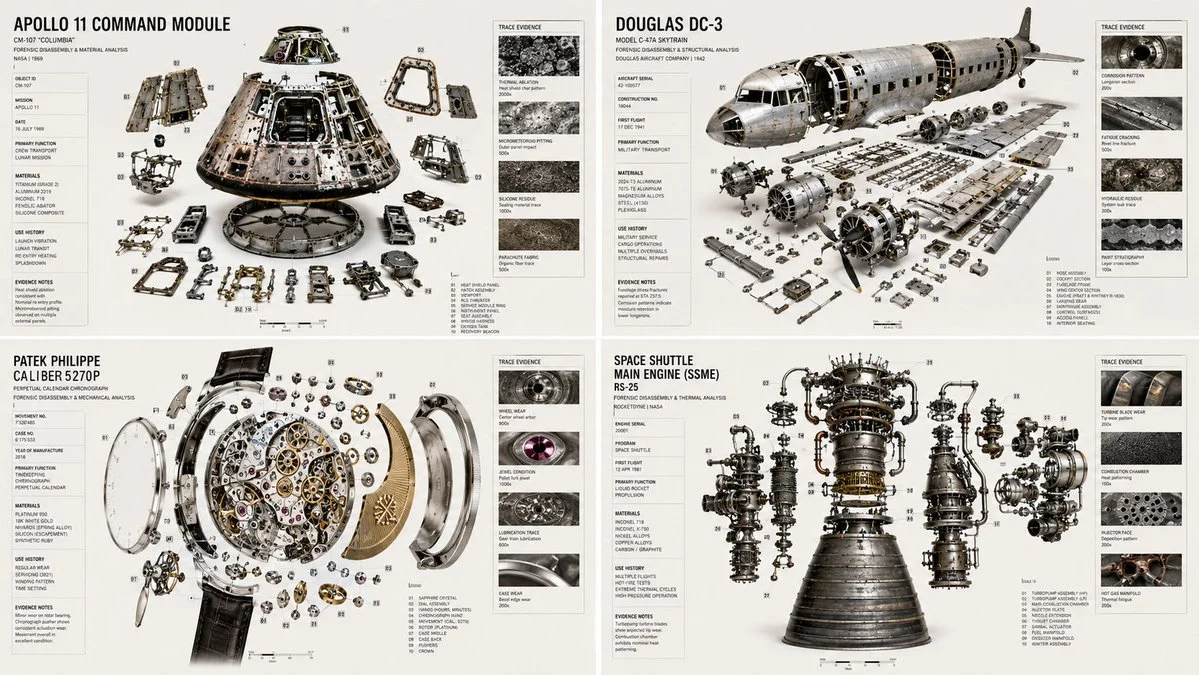
Explore the intricate details of complex machines through a luxury forensic poster. Each piece is meticulously arranged to highlight wear patterns, hidden mechanisms, and repair histories, creating a captivating blend of beauty and precision.
Prompt
2x2 grid, 16:9, do this for 4 complex machines: INPUT: [OBJECT / DEVICE / PRODUCT / TOOL / MACHINE / EVENT EVIDENCE] SYSTEM: Create a forensic luxury poster that disassembles the input with investigative precision. The image should feel like a museum-grade evidence plate combined with a premium object teardown. Infer failure points, wear patterns, trace evidence, use history, repair history, and hidden mechanisms. SEMANTIC SOLVE: FORENSIC_OBJECT = (INFER(core_identity FROM structure + material + wear + purpose) ::5) + (INFER(use_history FROM scratches + residues + fractures + repairs) ::4) + (INFER(hidden_story FROM assembly_order + stress_points + internal damage) ::4) + (INFER(context FROM environment + operator + maintenance + time) ::3) - (crime-show cliché + gore + sensationalism + clutter) ::-4 COMPOSITION: One central disassembled object arranged with perfect evidence logic. Use exploded spacing, numbered fragments, trace-detail insets, material callouts, and restrained annotations. Everything should feel clinical, beautiful, and intelligent. STYLE DNA: luxury forensic plate ::0.30 Swiss lab report design ::0.20 museum object study ::0.20 high-end macro photography ::0.20 subtle archive texture ::0.10 OUTPUT: Museum-quality forensic display poster, clean white or pale neutral background, precise callout lines, controlled hierarchy, and immaculate visual order. NEGATIVE: no blood, no horror aesthetic, no sensationalized crime drama, no clutter, no dark grunge overload, no watermark.
Published: May 15, 2026 by Gadgetify