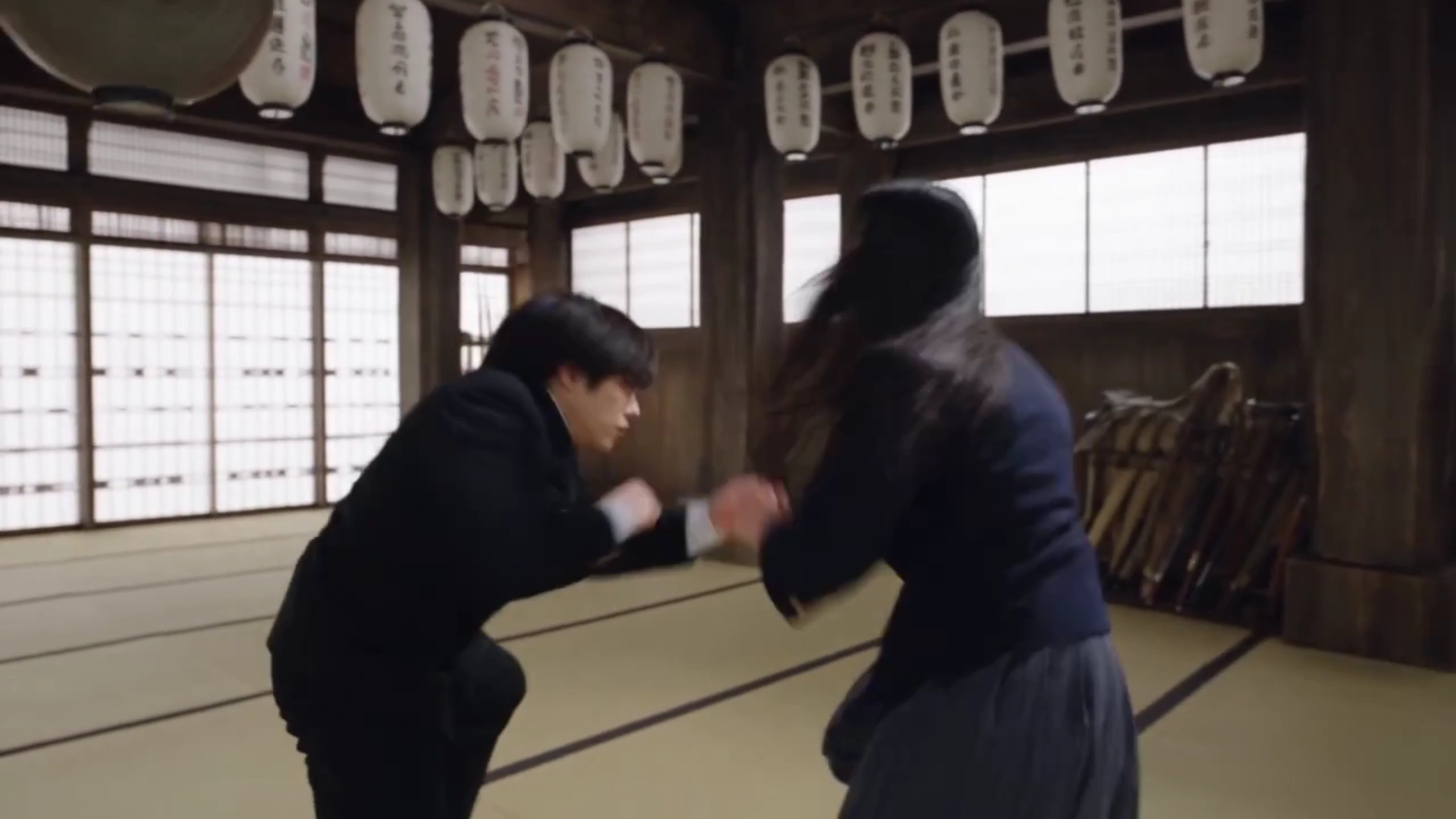
Gold-Blue Gauntlets Parry Flurry Before Decisive Spinning Counter in Dojo
Continuous shot captures every duck, parry, and fall on traditional mats as one fighter rises victorious over the fallen.
Prompt
video_1. Replace the hooded monk fighter with image_1, using his complete face, long tousled black hair, dark brown skin tone, muscular body build, white sleeveless shirt, blue striped track pants, black boots, and large gold-and-blue armored forearm gauntlets exactly as shown in image_1. Replace the attacking martial artist in the white gi with image_2, using his complete face, swept-up silver hair, light skin tone, athletic muscular build, purple open-collar shirt, dark fitted trousers, black boots, and black-and-gold armored shoulder and forearm pieces exactly as shown in image_2. Nothing of either source fighter’s face, body, clothes, footwear, necklace, sash, gi, belt, or wraps carries over. Replace the complete source dojo environment with the traditional tatami training hall in image_3 throughout the entire video. Remove the source wooden plank floor, red lanterns, rear shrine dais, red railings, source columns, calligraphic signs, decorative artifacts, and all other source set dressing not visible in image_3. Stage the duel on the level tatami floor, with both fighters supported by the tatami during every step, crouch, landing, hand brace, and fall. Everything else stays exactly as in video_1: every body movement, pose sequence, martial-arts action beat, character position, camera move, framing change, continuous-shot rhythm, and timing.

ACTIVE REFERENCES
image_1 is the complete appearance reference for the defensive fighter: use the dark-skinned muscular man’s long black hair, face, white tank top, blue track pants, black boots, and gold-and-blue forearm armor.
image_2 is the complete appearance reference for the attacking fighter: use the light-skinned athletic man’s silver spiked hair, face, purple shirt, dark trousers, black boots, and black-and-gold armor.
image_3 is the mandatory full-location replacement: use its spacious traditional Japanese tatami hall, dark timber beams and pillars, shoji-screen walls, upper wooden gallery, weapon stand at the far left, and rear display alcove.

SOURCE VIDEO
video_1 is the source video being edited. Preserve the opening airborne high kick over the defensive fighter’s low duck, the recovery into guard, the advancing punch flurry, forearm parries, spinning strike, brief hand-to-floor recovery, the second high kick, the defensive duck and spinning counter strike, the attacker’s backward collapse, and the winner’s controlled rise to stand over the fallen opponent. Keep the single continuous moving camera shot and its real-time pacing exactly in place.

SHOT-BY-SHOT GUIDE
Shot 1 (0.0-10.1s): Keep the same eye-level medium-to-medium-wide tracking and orbiting view of the uninterrupted fight. The image_1 fighter begins in the left foreground in three-quarter profile, crouched low on the tatami with both gold-and-blue armored forearms raised in guard and his gaze fixed toward the attacker. The image_2 fighter begins in the right midground facing left, launches the same flying high kick over image_1, rotates through the landing, and returns to fighting range on the tatami. From 2.8-5.2s, keep image_1 shifting backward through the left and center foreground while he deflects the incoming punches and spinning strike with his armored forearms; keep image_2 advancing from the right toward center with aggressive forward punches, then briefly dropping a hand to the tatami to catch his balance after the failed attack. From 5.2-8.2s, keep image_2 throwing the committed high roundhouse from the right side toward center; image_1 ducks beneath it, pivots on the tatami, and delivers the same decisive spinning counter strike, sending image_2 recoiling backward. From 8.2-10.1s, keep image_2 falling flat onto his back in the center-to-right midground with arms spread and remaining down on the tatami. Keep image_1 recovering into a low crouch near center-left, then straightening to stand over him with a calm downward gaze. Show the target hall’s tatami mats beneath both fighters, shoji screens and timber structure in the background, and the upper gallery at correct scale and depth. Do not show the removed plank flooring, lanterns, shrine steps, red railings, or source signs.

SETTING
Use the complete traditional tatami hall from image_3 as the only environment. The fighters occupy the open central tatami floor, scaled naturally beneath the high dark timber ceiling and upper gallery. Keep firm foot contact, knee contact, hand contact, and full-body landing contact with the tatami. Preserve natural depth through the foreground mats, central open training space, timber pillars, rear shoji screens, and distant display alcove. The weapon stand remains only at the far left edge where visible in image_3 and is not handled by either fighter.

EXPRESSION NOTES
Keep image_1 focused and composed through the evasions and counter, then calm and victorious while looking down at the fallen opponent. Keep image_2 intense and aggressive during the attacks, shocked at the counter impact,
Published: September 18, 2026 by Harboris