Image ChatGPT Image 2.6
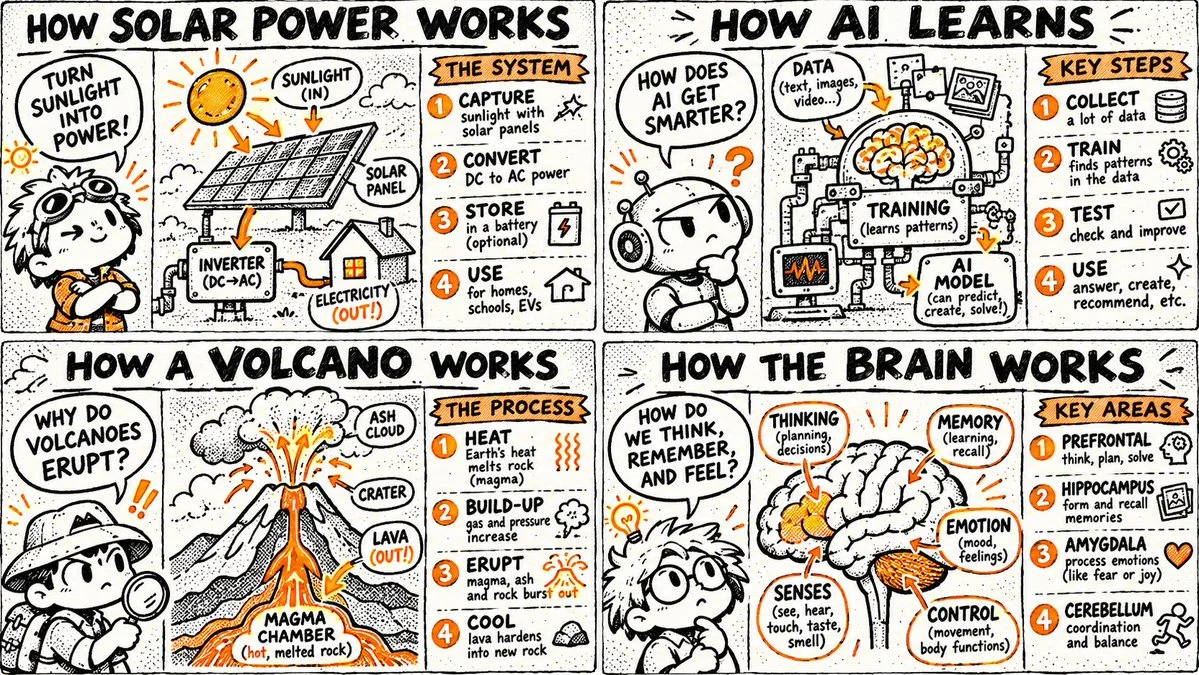
Grumpy Mascot Sketches a Wobbly Three-Column Explainer Page
Charming structured chaos: thick marker strokes, stippled dot shading, and orange crayon accents turn a subject into a playful, readable sketchbook infographic.
Prompt
Copied. Make it your own here.
Prompt prefilled · Suggested: GPT Image 2.6 Flare · 4 credits/image
CHARACTER   : subject-derived cartoon explainer | mascot | scientist | operator,
  SYSTEM      : subject-derived machine | process | mechanism | ecosystem,
  LIST        : inventions | parts | ideas | steps | outputs,
  LINEWORK    : thick marker strokes + wobbly lines + imperfect circles,
  TEXT        : quirky hand lettering,
  ACCENT      : orange crayon | subject-derived warm accent,
  CONNECTORS  : arrows | dotted lines | circles | callout links,
  TEXTURE     : stippled dot shading,
  FORMAT      : infographic | sketchbook page | editorial explainer
}

C₁  SUBJECT → INFOGRAPHIC DNA (master)
    infer SUBJECT identity, core mechanisms, symbolic parts, outputs, problems and playful personality; translate it into a hand-drawn explainer system with one expressive character, one central mechanism, and one organized list of subject-specific items.
    ¬C₁ = generic doodles / random machine / weak subject link / filler labels.

C₂  STRICT 3-COLUMN INFORMATION GRID
    use [GRID]:
    LEFT = expressive [CHARACTER];
    CENTER = messy hand-drawn [SYSTEM];
    RIGHT = organized [LIST].
    Keep the page highly structured overall while letting the drawing style remain loose and human.
    ¬C₂ = scattered layout / no column logic / weak hierarchy / random placement.

C₃  SUBJECT-ADAPTIVE CHARACTER PANEL
    design a cute slightly grumpy or puzzled cartoon figure representing the SUBJECT or its operator/explainer; pose should suggest thinking, troubleshooting or reacting to the central system. Keep anatomy simple, iconic and charming.
    ¬C₃ = generic mascot / emotionless figure / over-detailed rendering / unrelated character.

C₄  CENTRAL MACHINE / PROCESS DIAGRAM
    render the main [SYSTEM] as the visual heart of the page: layered components, imperfect circles, modules, chambers, pipes, moving parts or process nodes, adapted to SUBJECT. The diagram should look complex but remain readable.
    ¬C₄ = ordinary object drawing / no system logic / decorative clutter / unreadable complexity.

C₅  CONNECTIVE ARROW LOGIC
    link character, diagram and list using [CONNECTORS]; arrows, dotted paths, circles and callouts must explain real subject relationships such as cause/effect, inputs/outputs, inventions/parts or idea flow.
    ¬C₅ = meaningless arrows / decorative lines / disconnected columns / fake information flow.

C₆  HANDWRITTEN LABEL SYSTEM
    fill the right column and key callouts with [TEXT]; wording should be short, playful and subject-specific. Lists can become inventions, components, discoveries, species traits, tools, stages or concepts depending on SUBJECT.
    ¬C₆ = typed sterile labels / generic bullet list / long paragraphs / tiny unreadable text.

C₇  MARKER + CRAYON VISUAL LANGUAGE
    draw everything using [LINEWORK]: thick black outlines, shaky contours, imperfect geometry and handmade rhythm. Use [ACCENT] selectively for the most important arrows, focal details, eyes, symbols or key labels only.
    ¬C₇ = smooth vector polish / many colors / thin precise drafting / digital cleanliness.

C₈  STIPPLED SKETCHBOOK SURFACE
    white background, black marker structure, stippled dot shading instead of solid fills, minimal tonal rendering, charming notebook/editorial energy. Apply texture consistently so the page feels torn from a quirky sketchbook.
    ¬C₈ = flat empty white page / heavy solid fills / realistic shading / glossy finish.

η   CHARMING STRUCTURED CHAOS
    strict infographic organization + loose handmade execution; instantly readable columns, playful subject-specific invention logic, clear connective arrows, bold marker personality, restrained orange emphasis, dense but delightful explainer-page finish.

FORBIDDEN = random machines · generic scientist for every subject · disconnected arrows · typed clean fonts · multicolor palette · realistic rendering · smooth vector perfection · weak grid structure · unreadable labels · decorative filler doodles
Published: November 13, 2026 by Gadgetify