Image ChatGPT Image 2.6
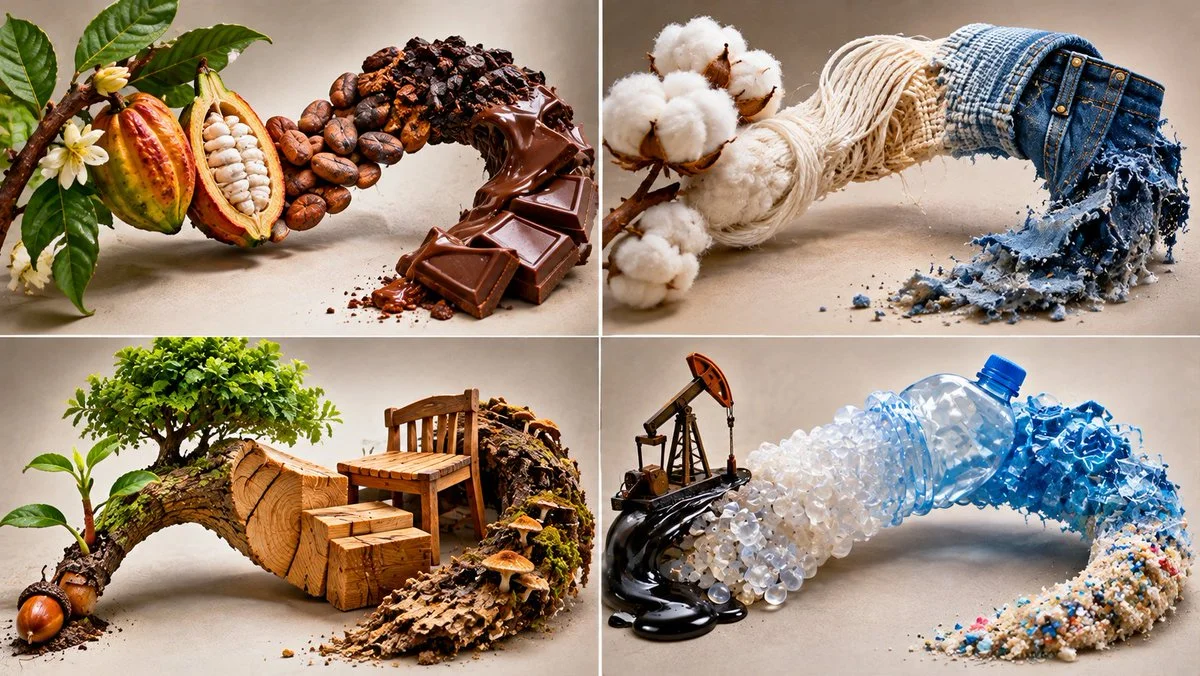
Material study captures the quiet transformation of one object across time
One uninterrupted form embodies origin, use, and aftermath, with transitions exposing structural change and a restrained setting that makes continuity unmistakable.
Prompt
Copied. Make it your own here.
Prompt prefilled · Suggested: GPT Image 2.6 Flare · 4 credits/image
[TIME_AS_MATERIAL_ENGINE]

INPUT = [VARIABLE_OBJECT_OR_MATERIAL]

INFER:
Determine a defensible lifecycle for the input:
its origin, formation, use, transformation, and likely aftermath.

Choose one coherent pathway.
Do not combine incompatible branches into a false sequence.

TRANSFORMATION:
TEMPORAL_SEQUENCE(INPUT) → CONTINUOUS_PHYSICAL_SPECIMEN

[MAPPING_CONSTRAINTS]

Create one uninterrupted specimen in which successive
regions embody successive lifecycle states.

Each state must physically transition into the next.
No panels, separate miniatures, timeline arrows, floating
vignettes, or repeated copies of the object.

Infer a continuous path suited to the subject.
Do not default to a straight strip or circular loop.

At every transition, expose the relevant change in structure:
what is added, removed, reorganized, consumed, or left behind.

Respect material identity and plausible transformation.
Do not imply that the arrangement represents real timescale,
quantity, or mass conservation unless it actually does.

[VISUAL_EXECUTION]

Photograph the specimen as an extraordinary material study.

Choose a viewpoint that reveals the full progression
while allowing close inspection of transitional regions.

Infer lighting from the surface properties.
Use a restrained setting that makes continuity unmistakable.

[VERIFY]

The eye can follow one unbroken physical path.
Each region has a distinct and defensible lifecycle role.
The transitions communicate the story without captions.
Published: November 10, 2026 by Gadgetify