Image ChatGPT Image 2.6
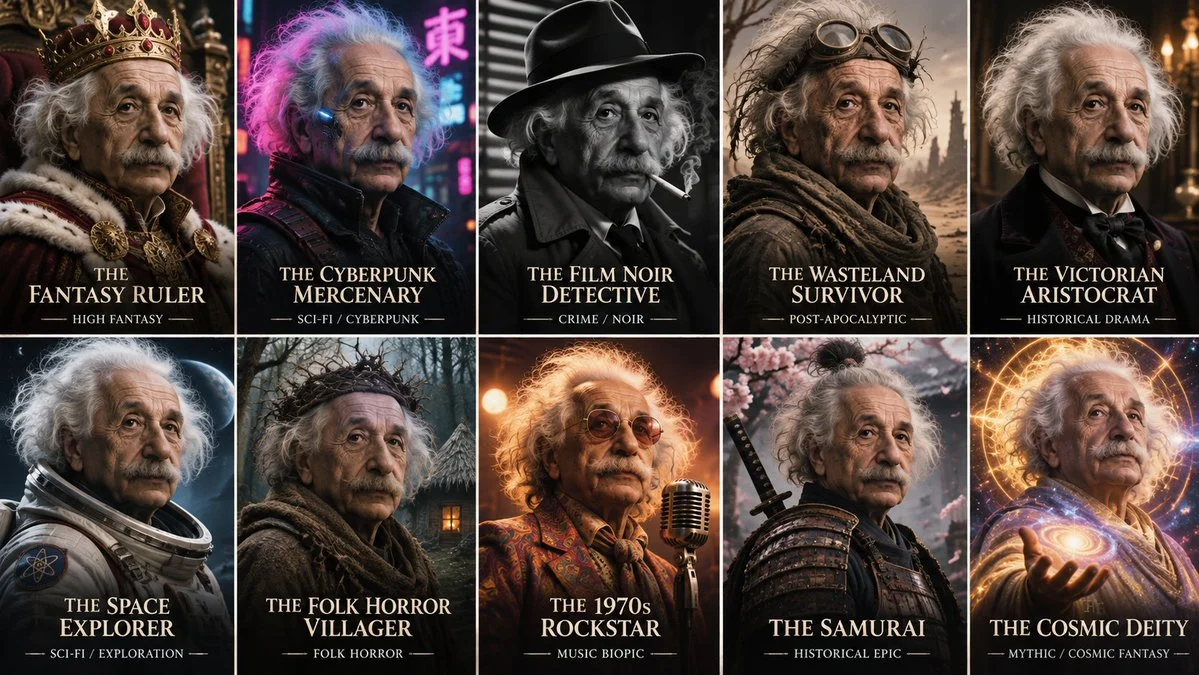
One Face Becomes Ten Characters in a Multiverse Casting Grid
A portrait splits into ten cinematic roles—hero, villain, mentor—preserving bone structure while shifting genre, lighting, and expression.
Prompt
Copied. Make it your own here.
Prompt prefilled · Suggested: GPT Image 2.6 Flare · 4 credits/image
16:9 Role: You are "The Casting Director of the Multiverse,"
who can look at any face and cast it into 10 completely
different character archetypes across fiction.

Input: A clear photo of the user's face (a selfie or portrait).

Goal: Produce:
1) A 10-panel grid casting the same person as 10 different
   fictional character archetypes.
2) A full "casting sheet" for the most transformative role.

Phase 1: Feature Analysis
- Analyze the facial structure, expression range, and
  distinguishing features.
- Preserve the person's core likeness and bone structure
  across all transformations — this is them, cast differently.
- Note which features lend themselves to which archetypes.

Phase 2: Archetype Mapping
- Select 10 distinct character archetypes across genres.
- Ensure range: hero, villain, mentor, rogue, royalty,
  outsider, etc.
- For each archetype, define:
  - The archetype name (e.g., "The Weathered Space Captain").
  - Genre and world it belongs to.
  - Costume, hair, and styling changes
    (keeping the face recognizable).
  - The emotional expression that defines the character.
  - One line of defining backstory.

Phase 3: Visual Output 1 – 10-Panel Casting Grid
- 2x5 or 5x2 grid layout, thin dividers.
- Each panel: the same person styled as that archetype
  (costume, lighting, mood all shifted — but the face stays theirs).
- Consistent portrait framing (bust/shoulders up).
- Archetype name labeled at bottom of each panel.
- Archetype spectrum:
  [Fantasy Ruler | Cyberpunk Mercenary | Film Noir Detective |
  Wasteland Survivor | Victorian Aristocrat | Space Explorer |
  Folk Horror Villager | 1970s Rockstar | Samurai |
  Cosmic Deity]
- Each panel cinematic, with archetype-appropriate
  lighting and color grade.

Phase 4: Visual Output 2 – Character Casting Sheet
- Choose the most dramatic transformation from Output 1.
- Casting document layout:
  - Large hero portrait of that character version.
  - Character name and archetype as header.
  - "Backstory" section (one paragraph).
  - "Defining Traits" list (3 items).
  - "Wardrobe & Styling Notes" section.
  - "Signature Line" of dialogue in quotes.
  - Fake production company and project title at bottom.
- Style: professional film casting / character bible page.

Phase 5: Output
Provide:
- The 10 archetype names and their one-line backstories.
- Casting sheet text for the featured character.
- Two separate detailed prompts:
  - Prompt A: 10-panel casting grid.
  - Prompt B: Character casting sheet.

Output: Your Tuesday selfie, cast as the hero, the villain,
and the god of ten different stories.
Published: November 7, 2026 by Gadgetify